
The stories write us, you see. We read something that moves us, touches us, speaks to us and it…it changes us.
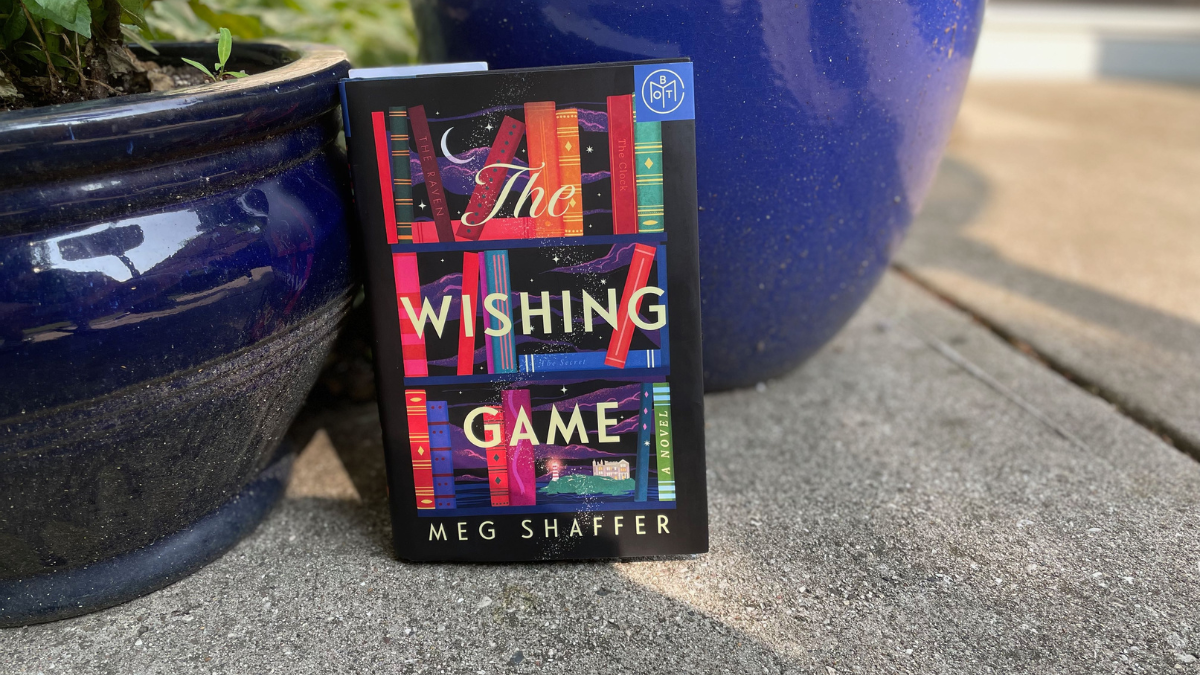
The Wishing Game, Meg Shaffer
It’s not a secret that Meg Shaffer’s, The Wishing Game, was somewhat inspired by Gene Wilder’s Willy Wonka. She states it in her acknowledgments: “First, I have to thank Gene Wilder’s Willy Wonka for taking over my brain in the third grade. Can you imagine getting the chance to play a game that could change your life?”
I think it’s safe to say that Meg imagined it, and brought it to life in a whole new and wonderful way. If you heed my advice and read the book, you too will see all the similarities between these two masterpieces.
Below are 4 reasons you’ll love The Wishing Game if you’re a fan of Willy Wonka.
Book Description
Make a wish. . . .
Lucy Hart knows better than anyone what it’s like to grow up without parents who loved her. In a childhood marked by neglect and loneliness, Lucy found her solace in books, namely the Clock Island series by Jack Masterson. Now a twenty-six-year-old teacher’s aide, she is able to share her love of reading with bright, young students, especially seven-year-old Christopher Lamb, who was left orphaned after the tragic death of his parents. Lucy would give anything to adopt Christopher, but even the idea of becoming a family seems like an impossible dream without proper funds and stability.
But be careful what you wish for. . . .
Just when Lucy is about to give up, Jack Masterson announces he’s finally written a new book. Even better, he’s holding a contest at his home on the real Clock Island, and Lucy is one of the four lucky contestants chosen to compete to win the one and only copy.
For Lucy, the chance of winning the most sought-after book in the world means everything to her and Christopher. But first she must contend with ruthless book collectors, wily opponents, and the distractingly handsome (and grumpy) Hugo Reese, the illustrator of the Clock Island books. Meanwhile, Jack “the Mastermind” Masterson is plotting the ultimate twist ending that could change all their lives forever.
*Brought to you by GoodReads
1. There’s an Eccentric & Lonely Rich Man
The first similarity that stands out the most is the eccentric lonely rich man’s character. In Willy Wonka, we have…Willy Wonka. In The Wishing Game, we have Jack Masterson. Both men are total weirdos with immense passion for what they do. Wonka loves chocolate and Masterson loves stories. Both experienced some trauma that forced them to isolate themselves and then prompted them to create a competition of some sort, inviting strangers into their homes.
What’s not to love?
2. A crazy competition ensues
If you enjoy Willy Wonka’s little contest, then you will LOVE The Wishing Game. Especially if you are a fan of books and riddles.
I will say that the competition in Willy Wonka is more incognito than the one in The Wishing Game. The contestants already know they’re going to Clock Island in hopes of winning Jack Masterson’s final book of the series. Just like in Willy Wonka, there is a lot more to this competition than meets the eye, and your heart will probably palpitate from some of the surprises (trigger warning).
3. There’s a poor protagonist with a heart of gold
Another glaringly obvious similarity between these two works of art is the main characters. Charlie and Lucy are both poor. Thankfully their poorness does not keep them from having a heart of gold.
Charlie literally has a hole in the roof of his bedroom. His mom is always making cabbage soup for dinner, and his grandparents all sleep in the same bed. While all of this sounds unfortunate, he still has a loving family. Charlie of course wishes for a better life for his family. For Charlie, getting that Golden Ticket is an exciting adventure that he’d never thought possible.
Lucy might have an intact roof, but she’s no richer than Charlie’s family. Her family also neglected her as a child, which is why she grew to love Masterson’s Clock Island books so much. Lucy’s biggest wish is to adopt Christopher, an orphan at her school, and winning Masterson’s competition is her only hope for getting the family she’s always wanted.
Both Characters start their stories wishing for more, and both get more than they ever imagined.
4. The setting is magical
I can remember watching Willy Wonka and dreaming of visiting his Chocolate Factory. The same goes for a lot of the books I’ve read. I’m still waiting for my acceptance letter from Hogwarts. You can also bet your bottom dollar that I investigate every wardrobe I come across in hopes of finding Narnia.
I’m incredibly jealous of Lucy, who got to visit the real Clock Island from her favorite book series. It’s a book nerd’s dream come true. Not only that, but she got to spend time with her favorite author. Meanwhile, Charlie’s invited to a Chocolate Factory that’s been hidden from the public for ages and meets the creative genius behind it all.
Clock Island and the Chocolate Factory both have a similar air of mystery surrounding them. Both are places not seen by the public and are inhabited by eccentric, lonely rich men. Last, but certainly not least, they are places where kids and adults can have FUN.
If this book doesn’t have you embracing your inner child, then I don’t know what will.
Just Read It
The best part about The Wishing Game is there is so much more to it than meets the eye. This book is about more than a competition. It’s about the power of stories and how impactful they can be on our lives. It’s about the power of forgiveness, love, and remembering that it’s okay to accept help from others.
I’m telling you this book has layers, just like Shrek and onions have layers. It has all the great elements of Willy Wonka, plus more. There’s comedy, drama, romance, and mystery.
If all of this sounds enticing to you, then I would highly suggest picking up this book. You’ll have no regrets.
If you liked this post then check out
Subscribe
 Just Read It